

Knowles Corporation Completes the Sales of Its Consumer MEMS Microphone Business to Syntiant
Dec 30, 2024
Knowles Corporation (NYSE: KN) ("Knowles" or the "Company") announced today that the sale of its Consumer MEMS Microphones business to Syntiant Corp ("Syntiant") has closed.
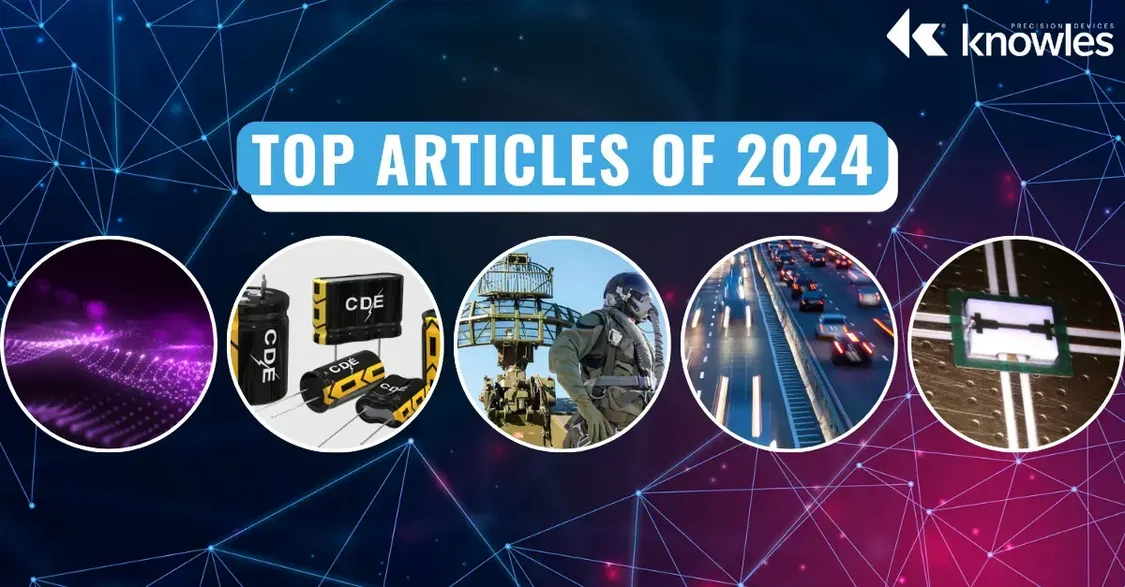
Top Articles of 2024: Broadband Crossovers, Supercapacitors and More
Dec 23, 2024
In 2024, our experts were dedicated to breaking down engineering fundamentals and exploring the latest industry trends and challenges. We hope you’ve found our insights and guidance helpful throughout the year, and we’re grateful for your continued trust and readership.
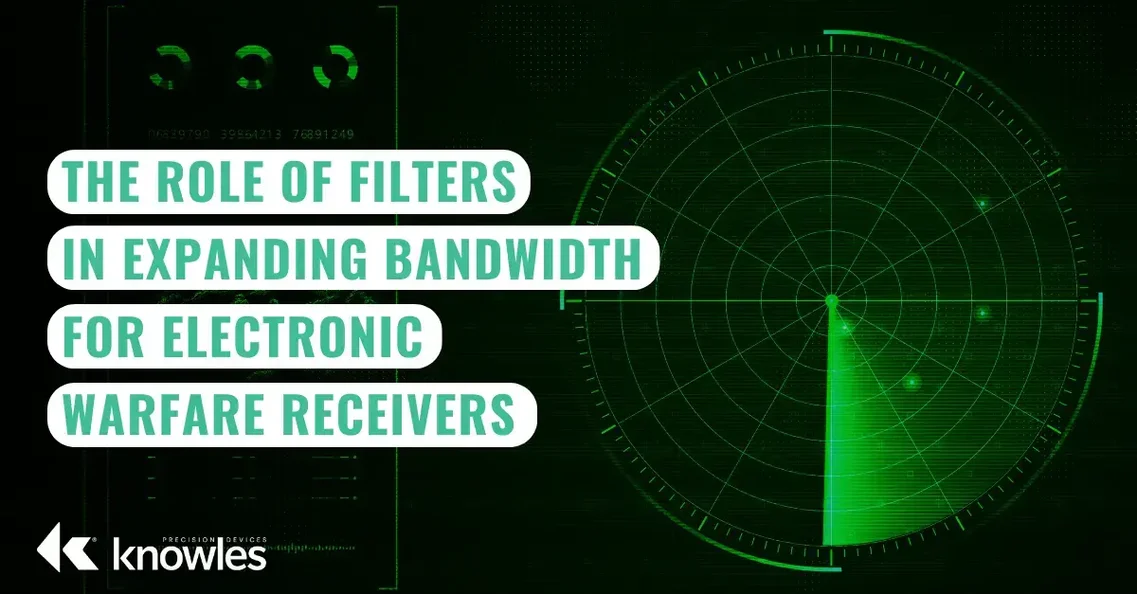
The Role of Filters in Expanding Bandwidth for Electronic Warfare Receivers
Dec 18, 2024
Electronic warfare (EW) systems are an increasingly critical component of modern warfare. They seek to control and exploit the electromagnetic spectrum to gain an advantage over adversaries while preventing them from reciprocating.
Knowles to Demonstrate Premium Audio Innovations at CES 2025
Dec 17, 2024
Knowles Corporation (NYSE: KN), a market leader and global provider high-performance capacitors and radio frequency (“RF”) filtering products, advanced micro-acoustic microphones and balanced armature speakers, will unveil its latest state-of-the-art audio technologies at CES 2025.
Knowles Appoints Laura Angelini to its Board of Directors
Dec 9, 2024
Knowles Corporation today announced the appointment of Laura Angelini as an independent director to the Company’s Board of Directors.
A Q&A on Thin Film Circuit Technology
Dec 4, 2024
Q&A on how thin film technology enables compact, reliable, high-performance RF circuits.
Understanding Buck and Boost Converters and the Capacitors Behind Them
Nov 25, 2024
Product designers working on critical applications requiring electrical power must carefully select components that not only supply the appropriate amount of voltage at the right time, but also help mitigate issues such as voltage ripple, ensure system longevity, and improve component reliability.
Examining the Definition of “Wideband” Through the Lens of Electronic Warfare Systems
Nov 20, 2024
In complex radio frequency (RF) applications, “wideband” has varying definitions depending on both the application of interest and the portion of the RF circuit you’re focused on. Wideband can be used to describe the entire spectrum shown in Figure 1 or large portions of it.

Powering Artificial Intelligence with Low-Loss Capacitors
Nov 13, 2024
As AI drives higher data center power demands, efficient power conversion and high-performance capacitors are increasingly important for reducing energy losses.
.webp?sfvrsn=4af440b1_1)
Exploring Our Energy Future with the Help of Capacitors
Nov 6, 2024
Companies across the world are engaged in fusion research; some are large national and international labs while others are start-ups looking for lower-cost alternatives to traditional fusion techniques.
Knowles Teams up with Mimi to Deliver Customized, Immersive Audio for Breggz
Oct 31, 2024
Luxury wireless hearables, Breggz ZOHN-1 are the first hearables to include the Knowles and Mimi combination for personalized listening and full-spectrum sound.
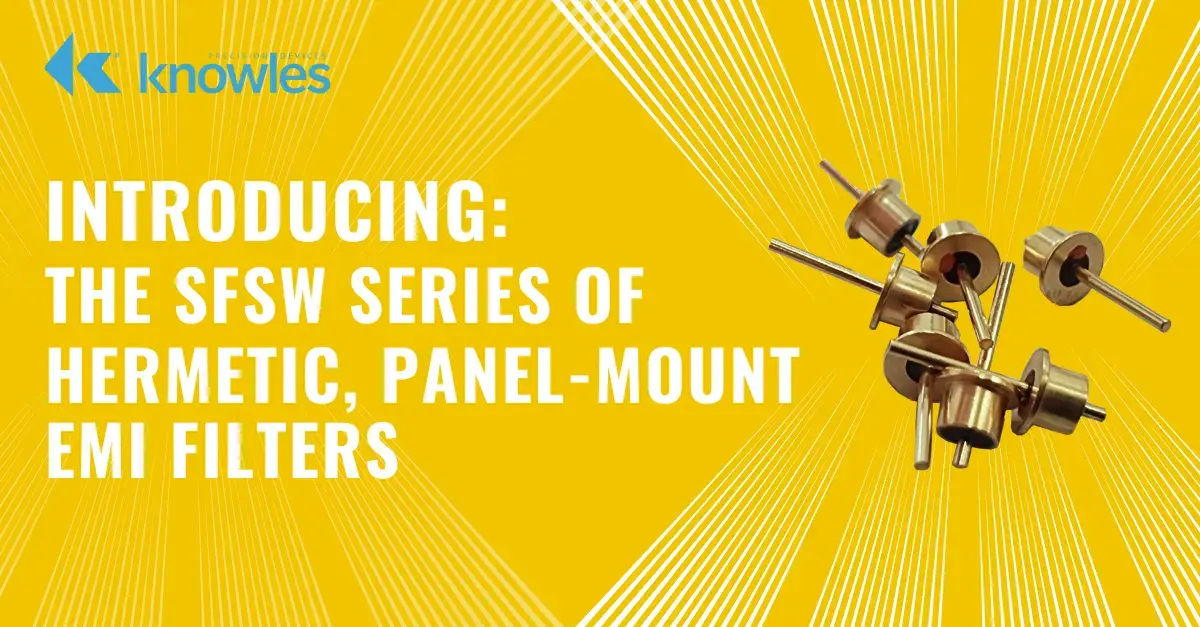
Knowles Introduces the SFSW Series of Hermetic, Panel-Mount EMI Filters
Oct 30, 2024
SFSW hermetic EMI filters deliver reliable noise suppression and signal integrity in harsh, high-frequency environments.